Skip to content

Posts from the ‘mains’ Category

pasta with parmesan, olive oil, and pepper
A little while ago I wrote an essay on the things I like about being alone. Not to say that I don’t enjoy being with people, but I’m very much the classic introvert—at the end of the day, my first impulse is to curl up somewhere and recharge quietly thinking things over. In my essay there was one example, however, where I swore I diverged from my loner ways: at mealtime. Spurred by painful memories of solo dinners as a freshman in John Jay Dining Hall, I was convinced eating alone was the ultimate form of social rejection. Reading, going for a walk, lying in bed staring aimlessly at the ceiling—all perfectly acceptable forms of solitude. But eating? I couldn’t admit to a meal alone, not even to my creative writing class (and if ever a bunch of college-age misfits convenes, I can guarantee they will be some sort of creative writing class).

The thing is, the more I think about it, the more I realize I wasn’t being entirely truthful. Eating alone surrounded by people may breed feelings of overwhelming rejection, but sitting by myself in the kitchen, the kettle close to boiling and two pancakes with a fried egg on top sitting neatly on the table in front of me, is truly one of life’s great pleasures. When you eat alone, it’s just you and your food—a near perfect relationship if there ever is one. There’s no need to impress, and alone I find myself going for simple, savory things that don’t take long to make and are primarily flavored with salt and pepper.

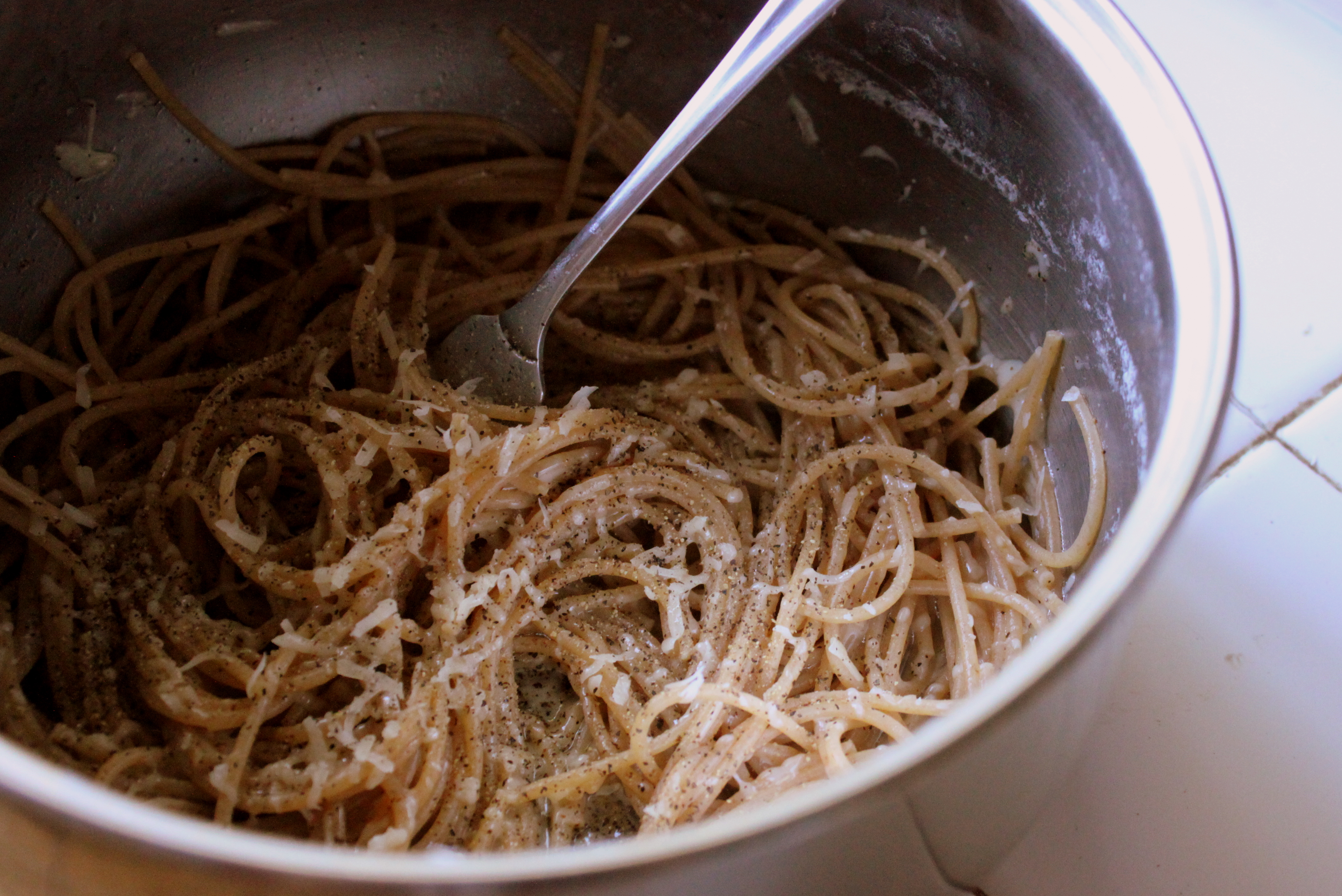
My most recent eating-alone obsession fits this bill. It has only five ingredients, if you count the salt and pepper but not the pasta water (which is, however, a crucial element). I’ve always been a lover of spaghetti with cheese—it’s a comforting throwback to those childhood days when carbs and dairy were the only things my sister and I accepted on our USA geography and solar system place mats. Traditionally I’ve always gone with extra-sharp cheddar (the day I ran a half marathon I received a number of raised eyebrows en route to a friend’s room when I stood by the elevator wrapped in a blanket with an enormous Tupperware of pasta, a giant block of cheddar, and a cheese grater). Last week, however, alone in the kitchen on my day off, I made a wonderful discovery. I couldn’t find the colander and had a quarter inch of pasta water left after inadequate draining; then I lazily decided to forgo a plate and grate a chunk of parmesan directly into the pot. A slip of the hand left me with a generous coating of black pepper, so I added in an equally generous glug of olive oil to loosen things up. A sprinkling of salt, a few whirs with a fork, and I had magic—cheesy, peppery spaghetti made creamy by the leftover pasta water. I ate it alone with relish, and it was lovely solitude indeed.

Pasta with Parmesan, Olive Oil, and Pepper

1/4 – 1/3 package spaghetti

parmesan

olive oil

salt

black pepper

Bring a small pot of heavily salted water to a boil and add in the spaghetti, stirring well to keep from sticking. When the pasta is very al dente (I like it verging on chewy) bring the pot to the sink and drain almost all of the water, reserving a 1/4 to 1/2 inch or so of water at the bottom. Place your pot on an unheated surface and add a generous glug of olive oil, then grate a healthy amount of parmesan over the spaghetti and finish with lots of black pepper. Stir well and eat hot–from the pot, of course.
caramelized onion tart with parmesan

It was an exciting weekend here at Love Apple. The farm and Chef David Kinch of Manresa (the two-Michelin star restaurant for which we grow all our produce) are featured in the August issue of Bon Appetit, with a spread that includes photos of our veggies and garden terraces as well as recipes Chef Kinch has crafted based on what we harvest for him each week. I haven’t been to Manresa yet (it’s a tad above the farm apprentice budget), but I can’t wait to try the recipe for these roasted cucumber sandwiches—particularly because I watched Chef Kinch roast our farm cucumbers this past Sunday afternoon.

The monthly cooking classes taught by Chef Kinch and Pim  are events to anticipate—I was lucky enough to assist in the June class my first day as an apprentice, and since then I’ve been eagerly waiting for my next opportunity to watch Chef and Pim at work (while washing 100 or so dishes of course). This Sunday’s class did not disappoint: it was held outside on the sunny farm patio, and the menu included grilled rack of lamb with fresh herbs, a fregola salad with roasted squash, fennel, and cucumbers, and a fig and plum tart smeared with frangipane (my new favorite condiment: almonds, sugar, egg and butter). I did my best to listen closely while bustling around the patio chopping herbs and collecting utensils, and I was well-rewarded when Chef Kinch gave us some advice that I immediately filed in my mental favorites folder: “Good cooking is the judicious use of salt.” (Tip of the day: if you salt your dish at multiple stages during cooking—instead of throwing in several liberal pinches at the end, like I do—it results in an increased complexity of flavor from salt cooked for various lengths of time).

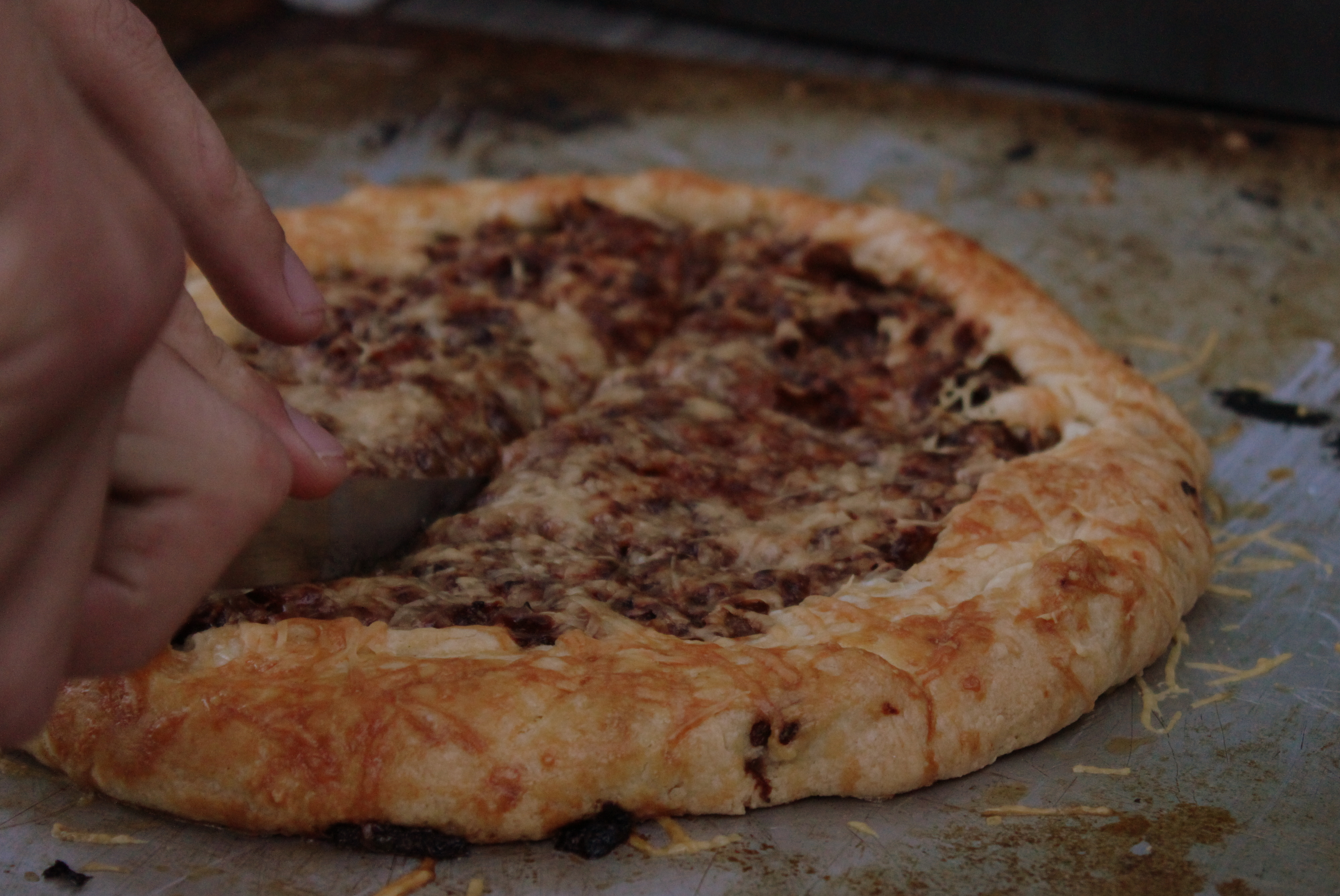
The class also ended up giving me a surprise chance to display my (non-existent) tart-making skills. While the students mingled with wine before their farm tour, Pim came up to me and, looping her arm conspiratorially through mine, declared that I would be in charge of duplicating her tart in the kitchen after she made one outside for the students. Eyes peeled I watched her every move, then I hurried inside and attempted to reenact her expert dough folds and arrangement of plums and figs. Unfortunately compared to hers (above), mine (below) looked decidedly rustic, but what it lacked in prettiness it made up for in almondy, figgy tastiness.

Fortunately for me, that was not the last of the tarts that entered my day—with Pim’s leftover dough from class, Zach and I set about making two more tarts for our nightly apprentices’ feast. One was the plum dessert from class, but the other was a throwback to my second night on the farm, when we made the onion tart Chef and Pim had cooked for the students in June. Flaky pastry, buttery sweet caramelized onions, toasty melted parmesan… need I say more? To top it off, our tarts baked alongside Phillip’s enchiladas and roasted potatoes. When every oven rack is filled, you know it’s a good night.

(p.s. A friend was curious about my soundtrack to the farm, and it would definitely have to be this. Enjoy!)

Caramelized Onion Tart with Parmesan

(Adapted from June’s Day Off Dinners with Chef Kinch and Pim)

There are two secrets to this easy tart, and they are Pim’s recipe for pastry dough, and caramelizing your onions for much longer than you would imagine.

1 round of dough made using Pim’s recipe, chilled

3-4 large onions, sliced into rounds

1-2 Tbsp butter

1 egg, beaten

fresh grated parmesan

Preheat your oven to 400 degrees. Roll out the dough on a well-floured surface, shaping roughly into a circle before transferring to a cookie sheet lined with parchment paper. In a large saucepan, melt the butter and add the onions, stirring regularly until they are dark golden brown (about 45 or so minutes). Spread your caramelized onions on the dough, then fold in the edges and brush the dough with your beaten egg mixed with a little water. Finally, sprinkle your entire tart with the parmesan cheese and bake for 45 minutes.

goat cheese zucchini lasagna

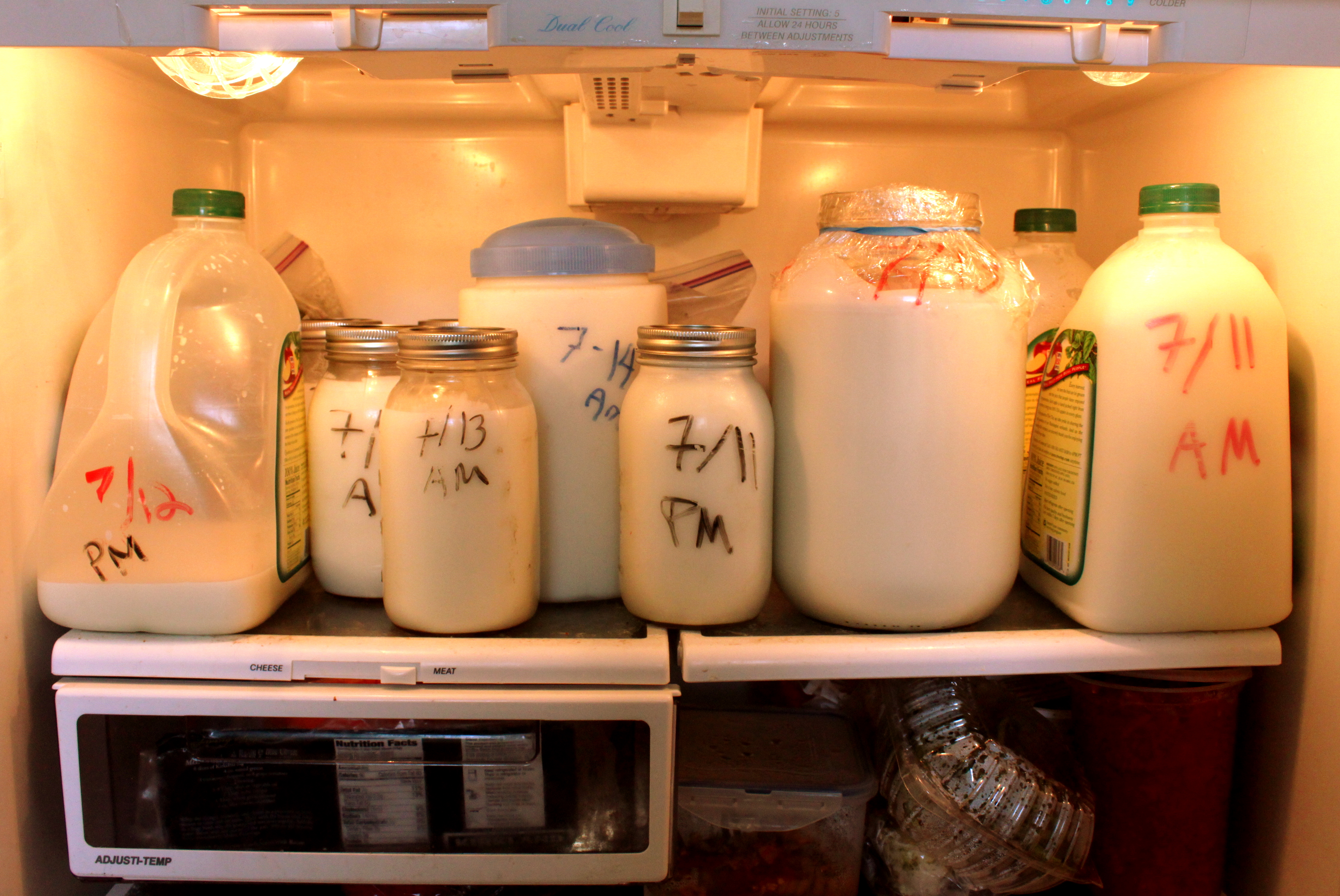
On any given day, this is what I see when I open our cottage refrigerator.

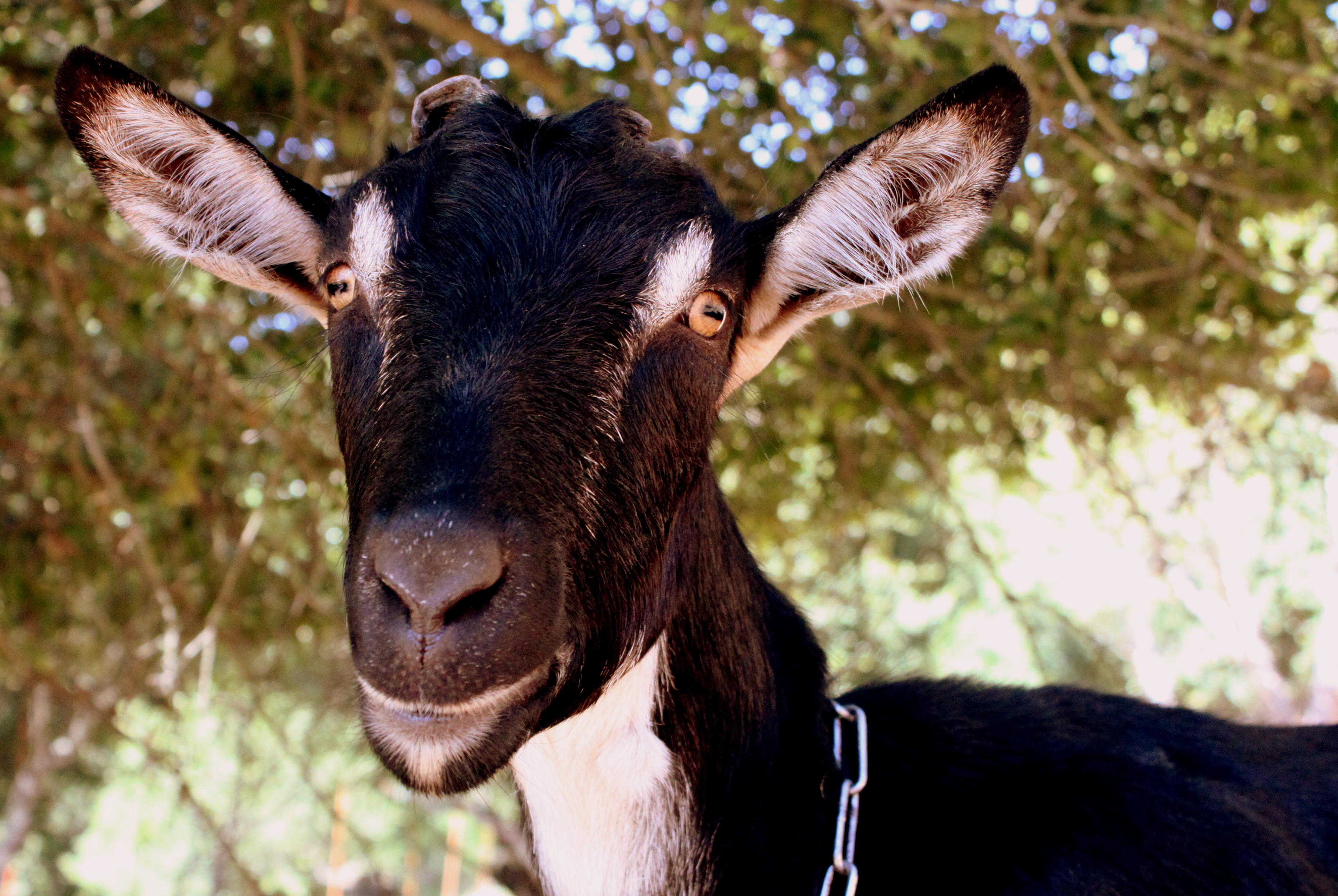
It’s an all-consuming battle, us seven 20-somethings versus a never-ending supply of goats’ milk (two gallons a day, to be precise). Fresh it tastes similar to cows’ milk, but after three or so days in the fridge it gets, well… goaty. We all have various tolerance levels for this unfortunate phenomenon—some grin and bear it by grabbing a five-day-old jar and pouring in a third of a bottle of Hershey’s syrup, some (read, me) give yesterday’s gallon a tentative sniff before hastily returning it to the fridge. “Finding out how much milk someone can drink in a day should be part of the Love Apple interview process,” someone joked my first week here, and though I had to laugh I also secretly cringed. I try to hide it, but since I’ve never been a milk drinker I’m the weakest link in our stand against the goats—Marty, Lupe, and Totes—and their prolific udders.

Still, I had a battle plan: cheese. A list of cheese recipes hangs from a magnet on our freezer door, and after consulting it thoroughly I decided I’d attempt cheese making on my days off this week. Armed with a packet of culture, a thermometer, and an enormous aluminum pot, I began with chevre, heating a gallon of milk to 86 degrees and stirring in the ordinary-looking white powder. And then… that was it. You let the milk sit for 24 hours to separate, then strain out the curds to hang for 4-6 hours. It was so easy I made three batches, satisfying myself with a mental tally for the day: goats—plus two gallons, Sara—minus three.

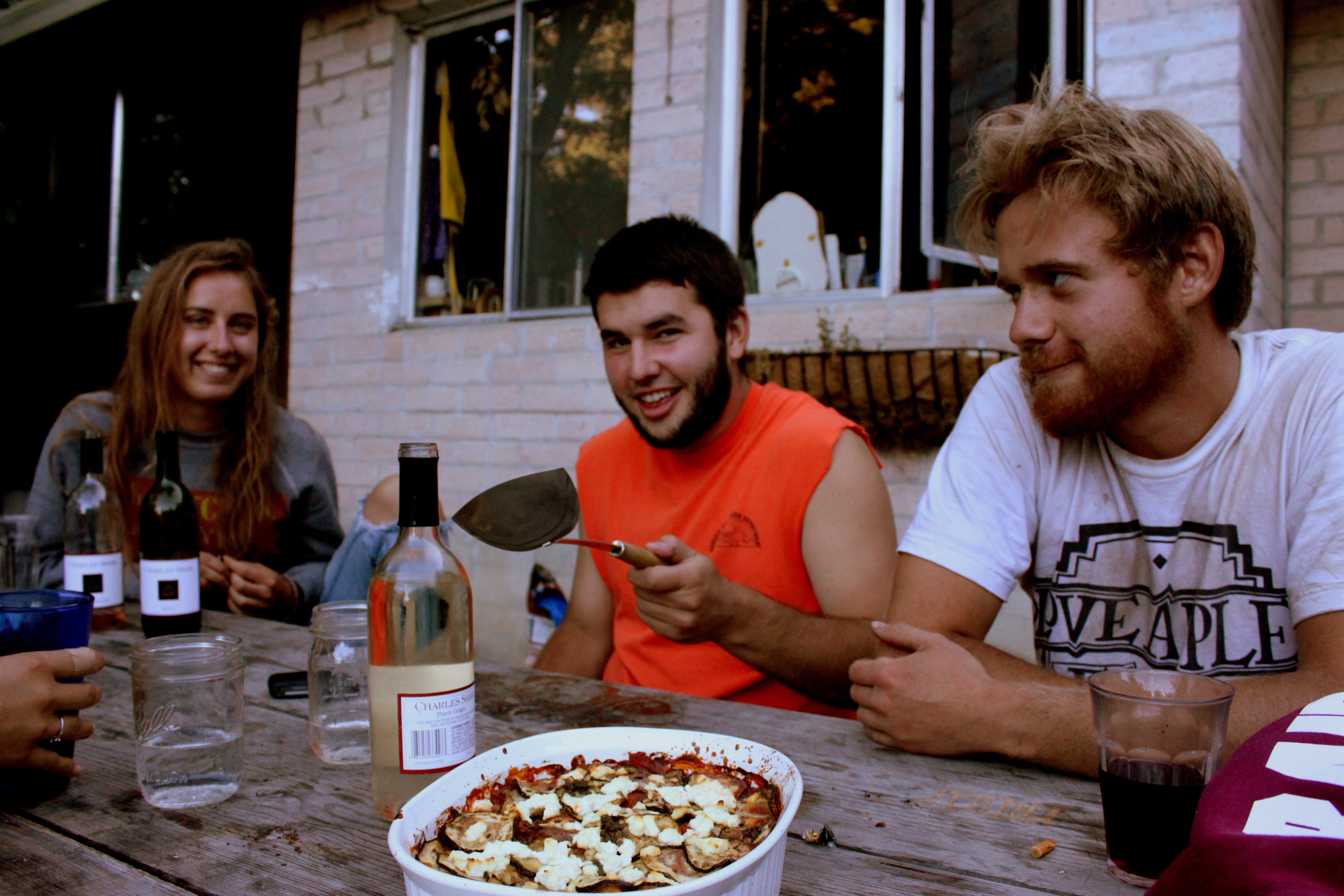
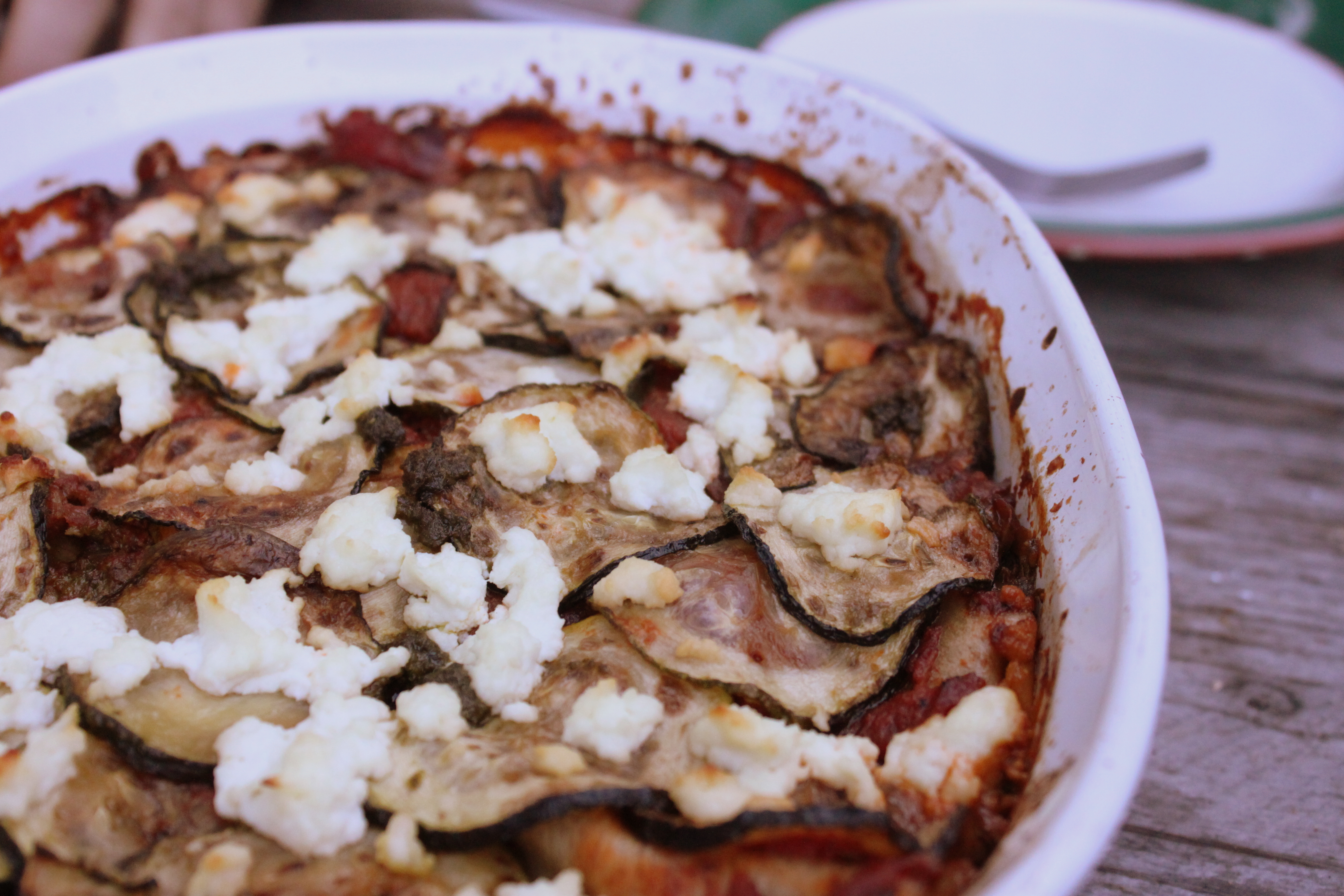
Of course the cheese never lasts as long as the milk. I eat it for breakfast on toast with jam, but cooking with it has inspired a number of dinners this week—eggplant zucchini gratin, goat pesto pizza, and a lasagna/pasta bake of sorts that threw all of the above (minus the pizza dough) together into two baked casserole dishes of cheesy goodness. Served with two-buck-chuck (those bottles are becoming a regular feature in my photos I know), it made for a wonderful Wednesday night. I’m even feeling a little better about milking at 7:30am tomorrow.

Goat Cheese Zucchini Lasagna

We only had a few lasagna noodles left so I ended up cooking some pasta and making that a layer–either way will work. Also you don’t have to make your own pesto and tomato sauce, but if you have fresh basil it’s especially worth the effort.

For the pesto:

several handfuls fresh basil

1/2 cup pine nuts

1/2 cups grated parmesan

2 cloves garlic

olive oil

For the tomato sauce:

3 cloves garlic, sliced

4 cups canned diced tomatoes

For the caramelized onions and mushrooms:

1 Tbsp butter

2 large onions, sliced into rounds

handful of large brown mushrooms

1 lb ground turkey

lasagna noodles (or penne pasta)

2 large zucchini, sliced into rounds

goat cheese, crumbled

salt and pepper

Blend the ingredients for the pesto in the blender until smooth, adding more or less of each depending on your textural preferences. In a medium saucepan, brown the sliced garlic in olive oil, then add in the diced tomatoes and simmer until most of the liquid has evaporated and the sauce looks thick and smooth. Meanwhile, heat butter in a frying pan over medium-high heat, then add sliced onions and mushrooms and caramelize, stirring regularly for about 40 minutes until they are dark brown and gooey. When the onions are done, set aside in a bowl and brown the turkey meat in the same frying pan. In another frying pan, heat olive oil and fry zucchini rounds in batches until each piece is lightly browned on each side. If you aren’t using no-cook lasagna noodles, boil a pot of water, cook your pasta, and drain.

To assemble, lightly oil a large casserole dish and begin layering, starting with the pesto and adding zucchini, pasta or lasagna noodles, tomato sauce, onions and mushrooms, meat, and goat cheese (in any order you choose). Finish with a layer of tomato sauce topped with zucchini and crumbled goat cheese, then bake in the oven at 350 degrees for about 45 minutes, or until sides are bubbling and cheese on top is beginning to brown.

potato salad with blue cheese and lemon

I’ve loved magazines for as long as I can remember. Lately I’ve come to think of it more as a mild obsession—I’ve read them pressed against a stranger’s neck on the subway, crumpled in my tent at 11,000 ft., balanced precariously on the rim of the bathtub, and flat across my knees in crowded lecture halls. My choice of titles has been equally varied: when I went through every little girl’s requisite horse phase I acquired a series of pen pals through Young Rider, in middle school I made collages from my copies of National Geographic, and my dorm room in New York was filled with old stacks of Wired, Good Housekeeping, Vogue, The New Yorker, and Women’s Fitness.

My favorite magazines, though, were always the food ones. In high school I would get up half an hour early to sit at the kitchen table reading Gourmet, Bon Appetit, and Food & Wine, perusing the feature spreads and dog-earing any recipes that looked promising. Ruth Reichl was my idol, and it was a secret dream of mine to work for Gourmet at the Conde Nast building in New York. In retrospect that dream was probably a large part of why I went to college in New York to begin with, and the fact that Gourmet folded my junior year is probably a large part of why I’m not still there.

The very first time I read a food magazine was a memorable occasion, if not for the circumstances then at least for the recipe I discovered. I was 11, on a trip with my family to spend the Fourth of July in Wisconsin, and my mother and I were wandering through an airport gift shop when the August issue of Bon Appetit caught our eye. The cover was commanded by close-up photo of blue cheese potato salad. I’d never had potato salad and I’d never read Bon Appetit, but it’s safe to say that two long and illustrious relationships began that day—one with the magazine and one with the potato salad I’ve since made countless times, twice in the past week. Today it’s safely bookmarked online in my epicurious.com recipe box, but when I’m home I still like to pull out our kitchen scrapbook, where pasted on a turquoise background is the same now faded page I read 11 years ago.

Potato Salad with Lemon and Blue Cheese

This version is adapted from the Bon Appetit recipe that can be found on epicurious.com, and as I discovered last week the quantities are easy to double (or triple, should you love cold potato salad as much as I do).

3 lbs small potatoes, quartered

2/3 cup olive oil

1/3 cup apple cider vinegar

1/2 cup red onions, chopped

2 Tbsp parsley

1/4 cup chives, chopped

1 Tbsp Dijon mustard

1 Tbsp lemon zest (plus juice from zested lemon)

3/4 cup crumbled blue cheese

In a large pot, boil potatoes until tender but not quite falling apart. Whisk together the remaining ingredients (except for the blue cheese) to make a dressing that should look nice and thick, and pour over drained potatoes while they are still warm. Add crumbled blue cheese and toss gently (a little mashing of the potatoes is fine). Cover and refrigerate and serve warm, cold, or at room temperature.

the best pizza ever

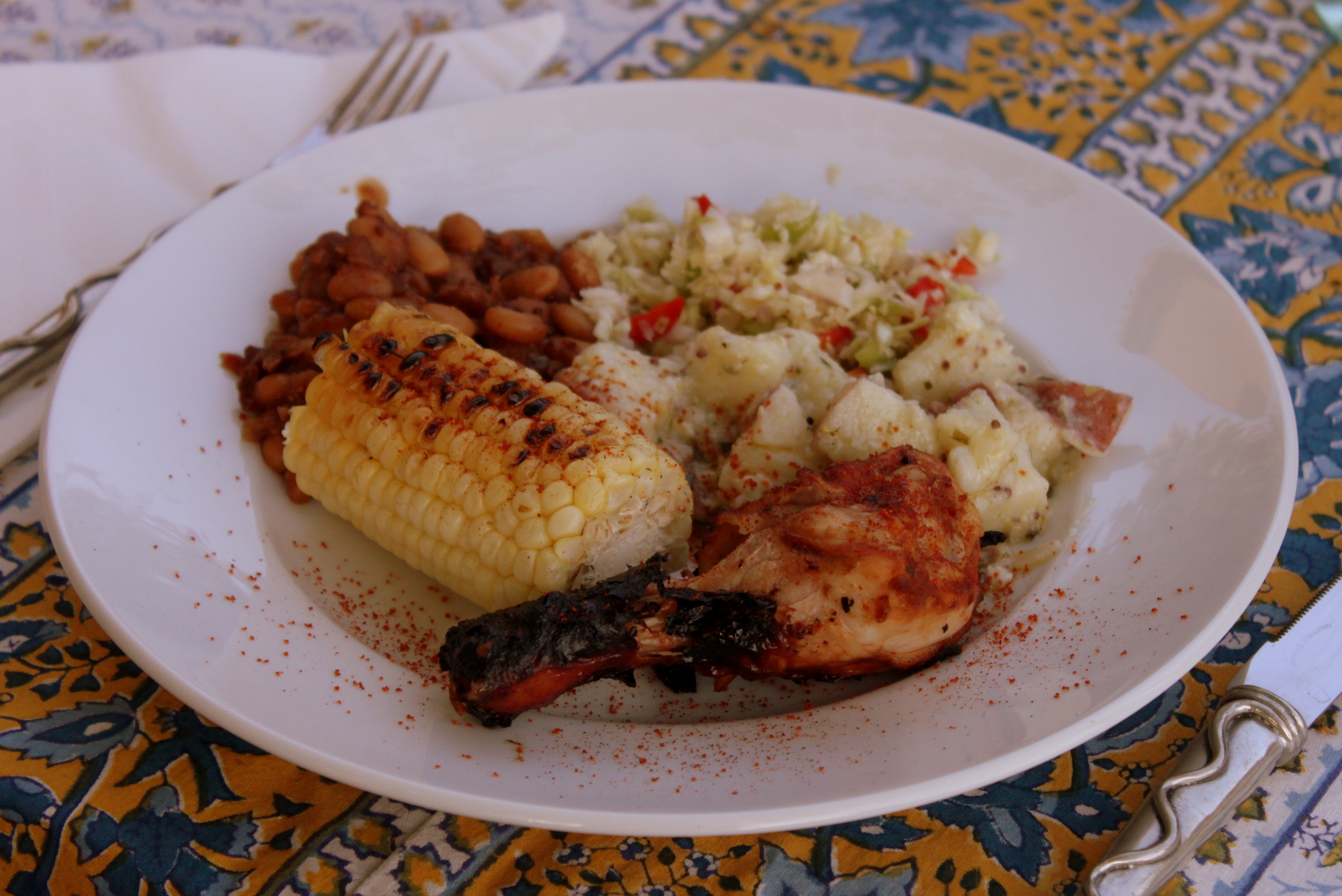
It was 8pm on Thursday night, and Ross and I were hunched over the granite countertop in the classroom kitchen, surrounded by dough and toppings. “You’ve got to make love to it,” he said with husky reverence, rolling the dough so that it stretched into a thin layer that we lifted onto a metal sheet pan. Having been cooking for close to 12 hours I felt qualified to get intimate with a pizza—after our morning meeting Ross, Phillip and I had headed straight to the kitchen to marinade chicken, boil potatoes, and process three batches of dough in the KitchenAid. It was a cooking marathon comparable to Christmas, and for an equally worthy occasion—Zach’s 21st birthday party.

I’d never really had success with pizza. When the urge for a homemade pie struck I usually resorted to Trader Joe’s prepackaged dough, but unfortunately that route generally results in a lumpy crust and a soft, undercooked center. When we decided to do pizza for Zach’s party—Love Apple has a beautiful pizza oven in the center of their outdoor patio—I was tempted to go for premade dough again, but Costco had none to offer. So I put on a confident face for Cynthia and Zach, assured people I’d made pizza on several occasions, and grabbed my laptop to google “pizza dough.”

Fortunately the first thing that came up was a recipe from Heidi Swanson, creator of one of my favorite food blogs, 101 Cookbooks. I made the dough at 8am Thursday morning with fingers crossed, but I knew it had a lot to live up to—Ross’ toppings included his famous caramelized onions and mushrooms, and Phillip’s barbequed chicken and ribs are pretty incredible. Then there was the bounty from the garden to contend with—carrots that became shaved carrot salad with thyme, chard that paired with quinoa, apricots, and pine nuts, and eight kinds of greens that filled three salad bowls. To top it off we even made potato salad with blue cheese and egg salad with eggs from the chickens. (If you can imagine the fridge at this point you’ll understand why the Christmas comparison begged to be made).

By 8pm the pizza oven—fired up at noon—was finally ready, and Ross and I carried out a pizza topped with caramelized onions, mushrooms, and gorgonzola. I’d selected a small egg from the flat in the kitchen, and right before sliding our creation into the oven Ross cracked it gently over the top. After three minutes in the oven and a few of Ross’ skillful maneuvers with the pizza peel, our pizza emerged—looking like real pizza. It was perfect.  I don’t think I’ve ever been so giddily proud of something I’ve helped to make, but mostly it was just a wonderful moment—the pizza, the food, the people, my first month on the farm. Six pizzas later I still felt just as good.

Pizza with Caramelized Onions, Mushrooms, Gorgonzola and Egg

I followed the recipe from 101 Cookbooks as closely as I could, with the main exception being that I made the dough early in the morning instead of the night before.

1 ball of pizza dough

butter

several medium onions, sliced

1 cup small brown mushrooms, sliced

1 medium wedge gorgonzola cheese, crumbled

egg

salt

fresh basil

In a large saucepan, melt a knob of butter and add the sliced onions. Caramelize over medium heat, stirring so the onions don’t stick and watching for them to turn a shade of dark golden brown. Saute the mushrooms separately, then mix in with the onions and set aside in a bowl. On a well-floured surface, roll your dough gently with a small rolling pin until it reaches about 12 inches in diameter. Transfer to a floured pan, or a pizza stone (or flipped-over cast iron pan) if you make your pizza at the highest temperature setting in a traditional oven. Smooth a scoop of the caramelized onions and mushrooms on the dough, then crumble gorgonzola on top. Right before cooking your pizza crack a small egg over the center, then slide into the oven and watch carefully for doneness (the crust should brown and crisp, the cheese should bubble, and the center should not be soft). Remove from the oven and sprinkle with salt and torn pieces of fresh basil.