Skip to content

sweet and spicy vanilla chai

Aphids. Job searching. Plant morphology exams. Rain. For all life’s minor trials and tribulations, there is but one foodie equivalent to the bubble bath: Chai.

Chai latte, to be precise. My chronology of chai began with Starbucks (ubiquitous purveyor of fancy drinks), and it was a “tall soy chai, no water, in a personal cup” that my mother asked for every Saturday morning as we began our weekly round of shopping. I joined her (with my own personal travel mug) all through high school, but like all who begin their specialty journey with Starbucks it wasn’t long before I was going more gourmet. Soon my sister and I had discovered the Garden Market, which featured a steaming mug of sugary chai with creamy, frothy foam. That chai (and several others along the way) led me to an important discovery: my favorite drink did not begin, as you might imagine, with tea. Sad to say, I was a die-hard fan of chai powder.

One of the benefits of chai powder (other than an insane sugar rush) is that it makes the chai latte as easy as boiling a pot of water. As a college freshman I drank chai lattes in bed, in class, as late-night snacks and morning pick-me-ups. I drank them so often, in fact, that my desire for chai began to wane. Years passed with only the occasional Starbucks visit when I went home, and then, when powdered chai was all but forgotten, I passed a display of chai latte powder in Trader Joe’s last week.

It was a spur of the moment purchase with consequences that shook our small apprentice world. The initial can of powder was gone in two days, and the following two we bought followed shortly after. When Pim gave me a box of Chai spices after a macaron class I began doctoring my insta-latte, and soon I was adding milk, vanilla extract, honey… and somewhere along the way I made it back to tea. Now I sprinkle just a light dusting of powder in my chai, and if nothing else it offsets the 5 tablespoons Phillip and Sara Lieber put in theirs.

Sweet and Spicy Vanilla Chai

black tea (loose or bagged)

milk

1 tsp chai spice blend (star anise, cardamom, cinnamon, cloves)

honey

vanilla extract

1 tsp chai latte powder

Brew your black tea in a teapot or mug until strong. Remove teabag or leaves and add milk, chai spice blend, vanilla extract and honey for desired sweetness. Sprinkle chai latte powder on top, stir or froth, and enjoy!
a very fine roast chicken

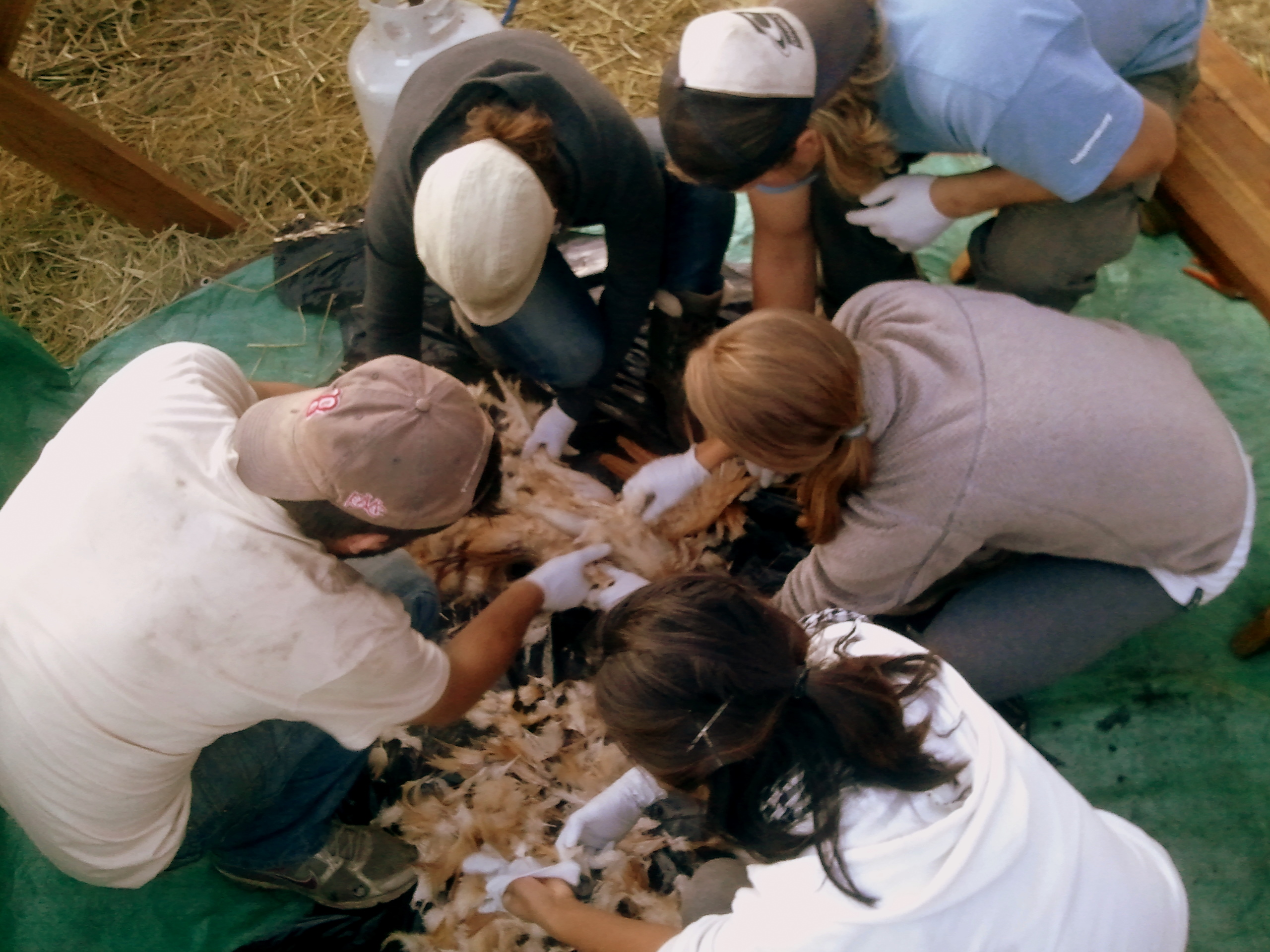
On Monday, we killed a chicken.

I suppose slaughtered would be the correct term, but let me back up a bit. Here on the farm we have around 75 chickens, the majority of which are mature, egg-laying birds that share the pasture with our goats. The smaller coop down by the garden is reserved for the youngsters—chicks left over from chicken-keeping classes that are raised in isolation until they are big enough to join their peers without getting picked on. Another reason for keeping the babies separate? You may order hens, but it takes several months to determine whether one of your fluffy girls is actually a boy.

A few weeks ago, we began to suspect. Nascent crows could occasionally be heard from the small coop, and one of the birds had the beginnings of long, arched tail feathers and a comb. Up at the cottage we’d often talked about slaughtering an animal, a practice that few carnivores do today but that defines a farmer’s relationship with his meat. When it became clear that our suspect was in fact a rooster, we approached Cynthia and Daniel and received the go-ahead.

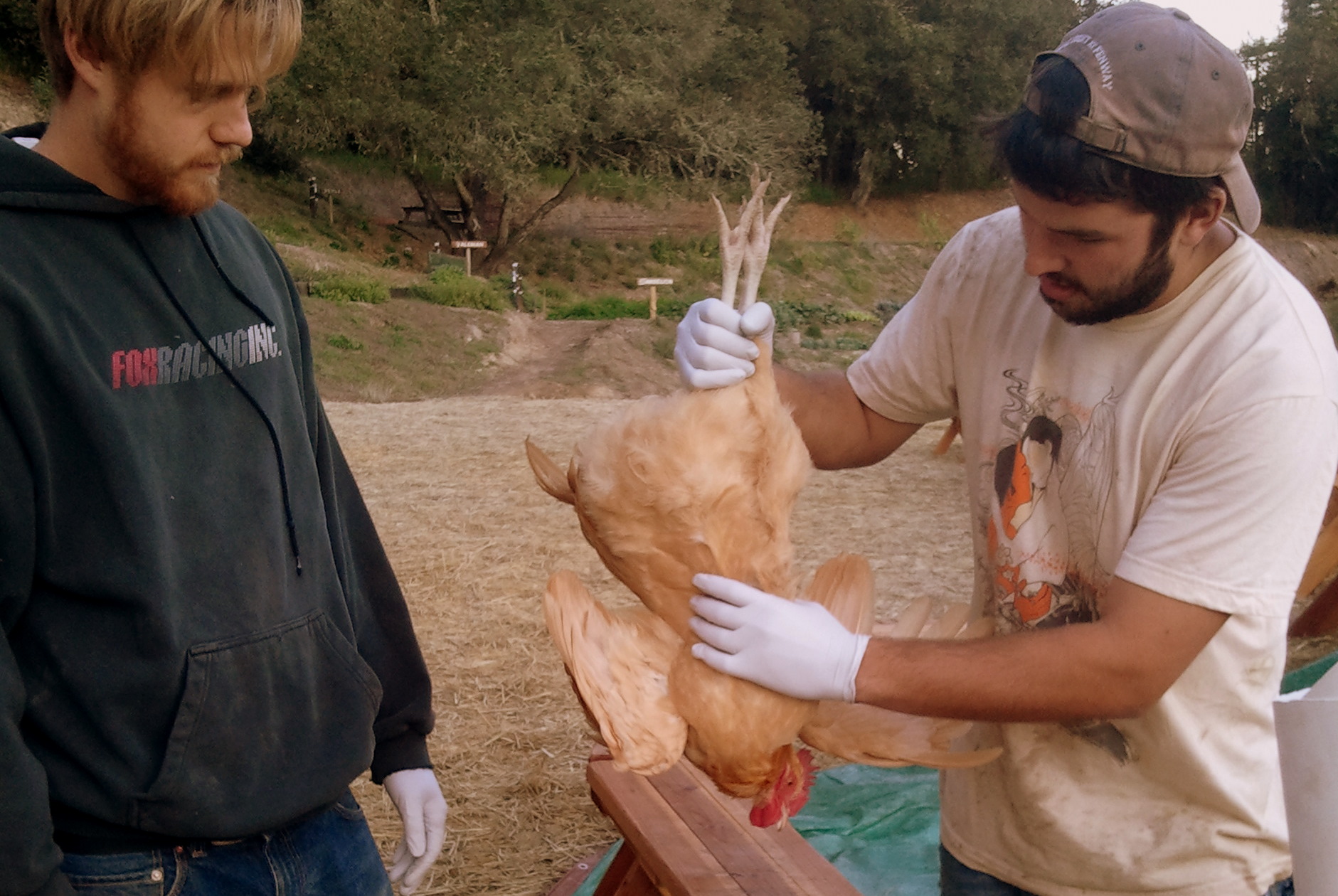
On Monday afternoon we assembled, the five of us (plus one lucky prospective apprentice) hushed with concentrated activity. Everyone had some sort of preparation for the event: Ross killed a duck in culinary school, Christine witnessed the slaughter of a cow, Adam heard stories of his Mamaw’s neck-twisting techniques, and Phillip watched youtube videos and sharpened his machete. I, on the other hand, have fainted not just at the sight of blood, but at the thought of it (end result: a concussion and trip to the emergency room, driven by my friend with the bleeding finger). I was not prepared, but I was determined to watch.

Well, watch behind a camera. Of course this meant that if I passed out the camera would be going down with me, but that was strong incentive to remain standing. And when it actually happened, I was shocked at how unassuming it all was—there was no struggle, no squawking, no horror-movie cascade of squirting blood. It wasn’t cruel, and it wasn’t overly sentimental. I suppose when you know what you’re doing, killing a farm animal for its meat can be a part of life.

But for eating an animal to be ritual, you have to eat all of it. So last night that’s what we did, piece by piece: from the heart (Ross: “I’m a man now!”) to the wings, neck, and deliciously tender breast. When the night was over there was only a carcass left, and with Thanksgiving coming up, we’re starting to eye the wild turkeys as they amble down the drive.

vanilla ice cream with cinnamon

If you’d told me last year that I’d be lugging a Cuisinart ice cream maker through San Jose International Airport on a Wednesday night, I would have raised an eyebrow. The man behind me at security certainly did, flinching as he watched me hoist the thing onto the x-ray belt next to my significantly smaller bag of clothes. “Is that a Cuisinart?” he asked, and I nodded with the irritation that lingers after being asked to take off your shoes. “Well,” he sighed, “That’s not something you see every day.”

The backstory to squeezing a gigantic Cuisinart box under the plane seat in front of me goes like this: for my mother’s 50th birthday, I thought it would be a lovely idea to buy her an ice cream maker. Yes, she had requested it several months earlier while flipping through a Williams-Sonoma catalog, but it was also partly a selfish purchase—ice cream is quite possibly my favorite food. Field trip to Santa Cruz for cheap sushi? Three scoops of green tea. Burrito lunch after harvest? A hefty arroz con leche ice cream bar. I marked the end of every college finals season with a pint, asking the cashier for a plastic spoon so I could start eating on the 5-block walk back to my dorm. I may forgo the last slice of cake or the final cookie in the jar, but with ice cream I always go in for the last bite.

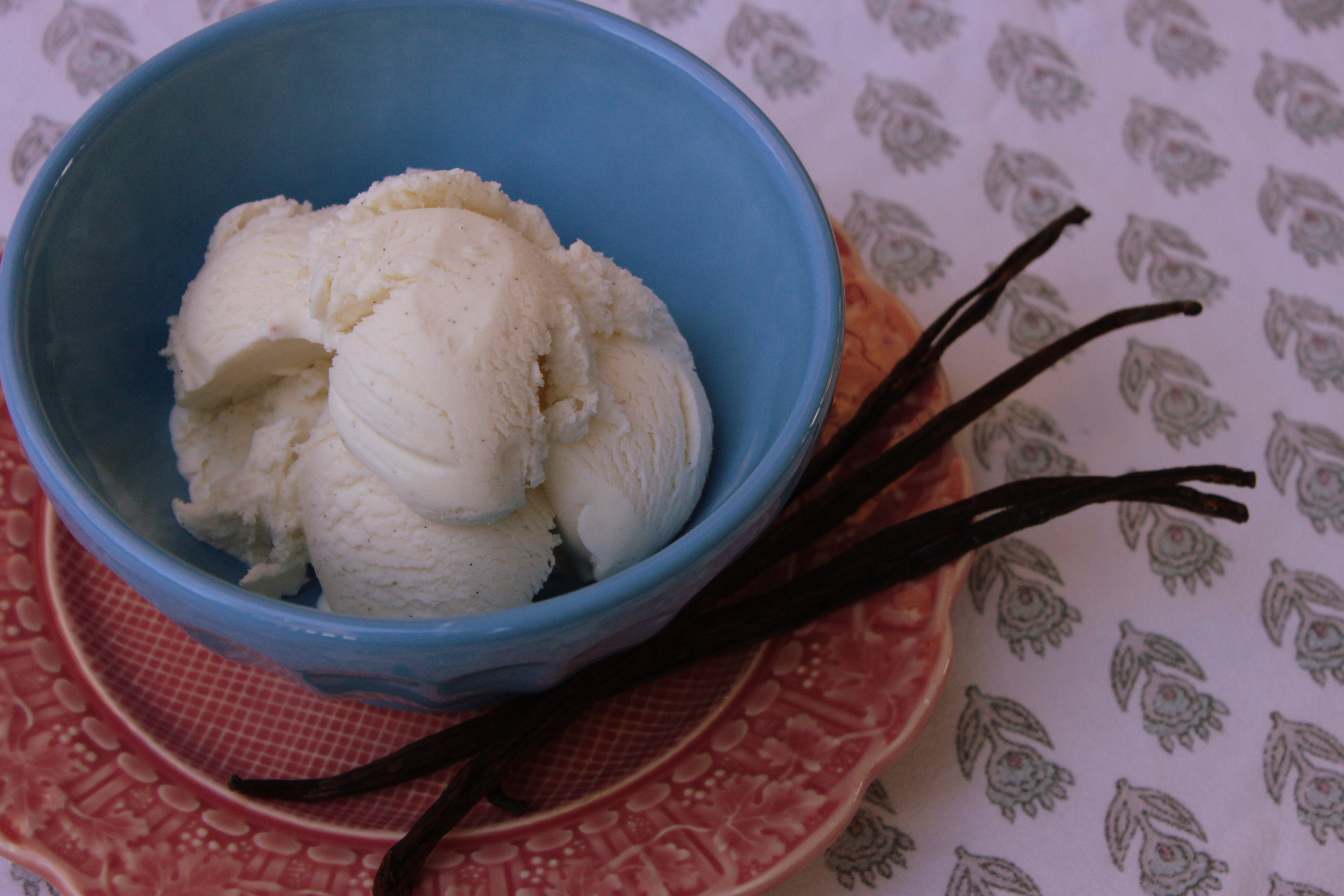
I’ve done homemade ice cream before, usually following the traditional custard recipe of eggs, sugar, cream and milk. It was good (what homemade ice cream isn’t?) but recently I came across a book in Bookstore Santa Cruz that made me reconsider my relationship to Ben & Jerry’s Americone Dream. Jeni’s Splendid Ice Creams at Home features recipes for Goat Cheese Sour Cherry and Salty Caramel, but most interesting were her basic ingredients: milk, cream, sugar, corn starch and cream cheese. Add a mahogany vanilla bean from Madagascar (courtesy of our good friend Sandy) and an enormous stick of cinnamon, and you have perfection worthy of making 20 pounds of brushed steel airborne.

Vanilla Ice Cream with Cinnamon

Adapted from Jeni’s Vanilla Bean Ice Cream.

2 cups milk

1 generous Tbs cornstarch

3 Tbs cream cheese, softened

1 1/4 cups heavy cream

2/3 cup sugar

1 vanilla bean, split with seeds scraped

1 cinnamon stick

pinch salt

Combine the cornstarch with two tablespoons of milk in a small bowl. In another bowl, whisk the cream cheese until smooth.

In a saucepan, mix the remaining milk with the cream and add the sugar, cinnamon stick and vanilla bean with seeds. Bring the mixture to a boil over moderate heat, then turn off the heat and add the cornstarch mixture. Return to a boil and cook for a minute or so until slightly thickened.

Whisk the hot milk mixture into the cream cheese until combined. Add the salt and let the ice cream base cool until the bowl is cold to the touch. When cool, remove the vanilla bean and cinnamon stick and freeze in your ice cream maker (a worthy investment, let me tell you!).

potato fennel soup with eggplant

“Summer afternoon – summer afternoon; to me those have always been the two most beautiful words in the English language.”

Looking out from our kitchen at the redwoods dressed in afternoon sun I would tend to agree with Henry James. No, October 22nd isn’t really summer in the true sense of the word, as much as the warm weather and last farm zucchinis on the table suggest it. But I’m ready to make amends with fall, starting with the fact that I spent my summer afternoon making the one meal that makes me crave autumn above all else—soup.

In my family soup was never relegated to the role of mere starter. Halloween meant costumes, trick-or-treating, and the Great Candy Trade which commenced every year when our haul was complete, but just as much as any of those things it meant soup—pots of it steaming on the stovetop to greet tired  flamenco dancers and their parents. My earliest memories of eating vegetables (and enjoying them) are all memories of soup: kale and potato soup with Polish sausage, creamy butternut squash soup, broccoli soup that had even our veggie nemesis friend Hayley asking for seconds. When I started cooking for myself in college the first recipe I came up with was for soup, a mishmash of vegetables, beans and pasta that I made repeatedly for months. I still remember the delight of standing over the pot that seemed to fill the entirety of my college kitchen—and the tragedy when I spilled an entire 2-quart Tupperware of my concoction onto my dorm room floor.

Last week, as if right on cue, a book mysteriously appeared on our kitchen table: The Soup Bible: All the soups you will ever need in one inspirational collection. (yes, bolded just like that). According to a scratched and peeling sticker on the cover it was $7.98 from Barnes & Noble—that’s right, $7.98 for all the soups you will ever need, plus tips on how to make swirled cream toppings, leek haystacks, and sippets (which are, apparently, large croutons). After an extensive perusal I had not only discovered a term for soup I’d never known before—“pottage”—but I was inspired to abandon the inspirational collection for a soup of my own. Harkening back to my early college days it’s a mishmash once again, but one entirely from the garden: in honor of summer afternoons, autumn days, and all that falls in between.

Potato Fennel Soup with Eggplant

1/2 onion sliced

2 cups chopped fennel (mostly bulb with some frond)

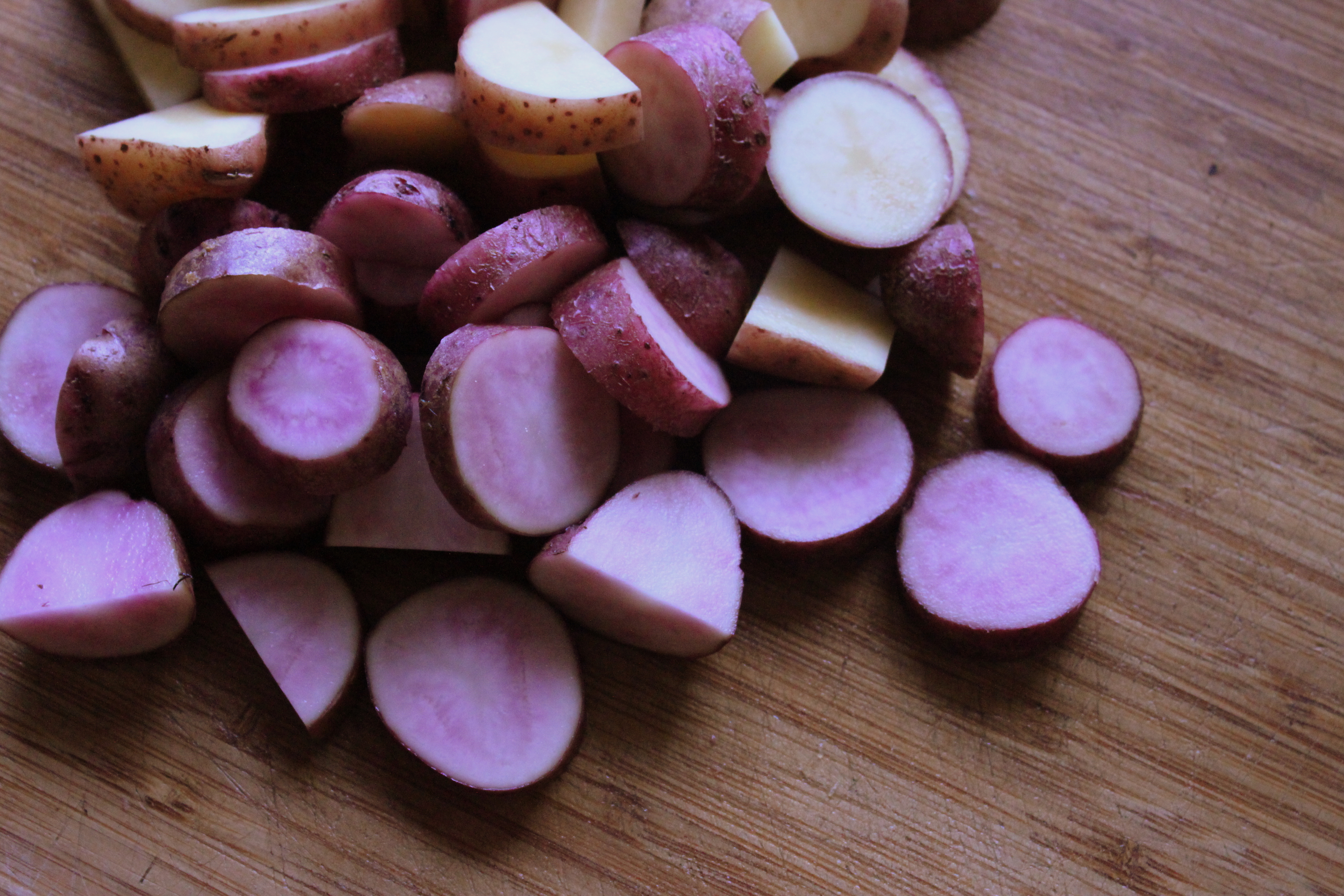
2 cups cubed potatoes

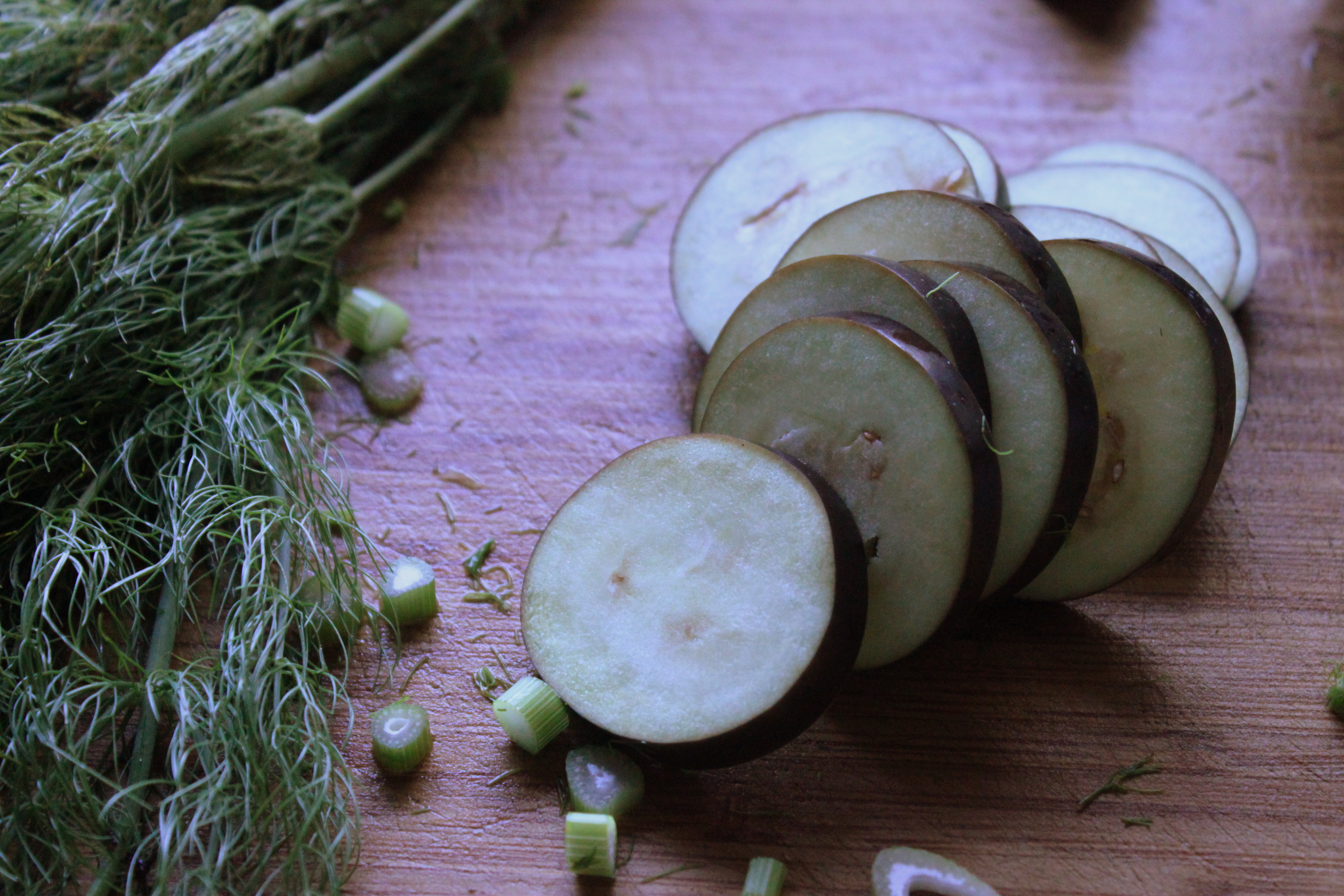
2 small or one medium eggplant sliced

2 cups chicken broth

1/2 cup milk

salt & pepper

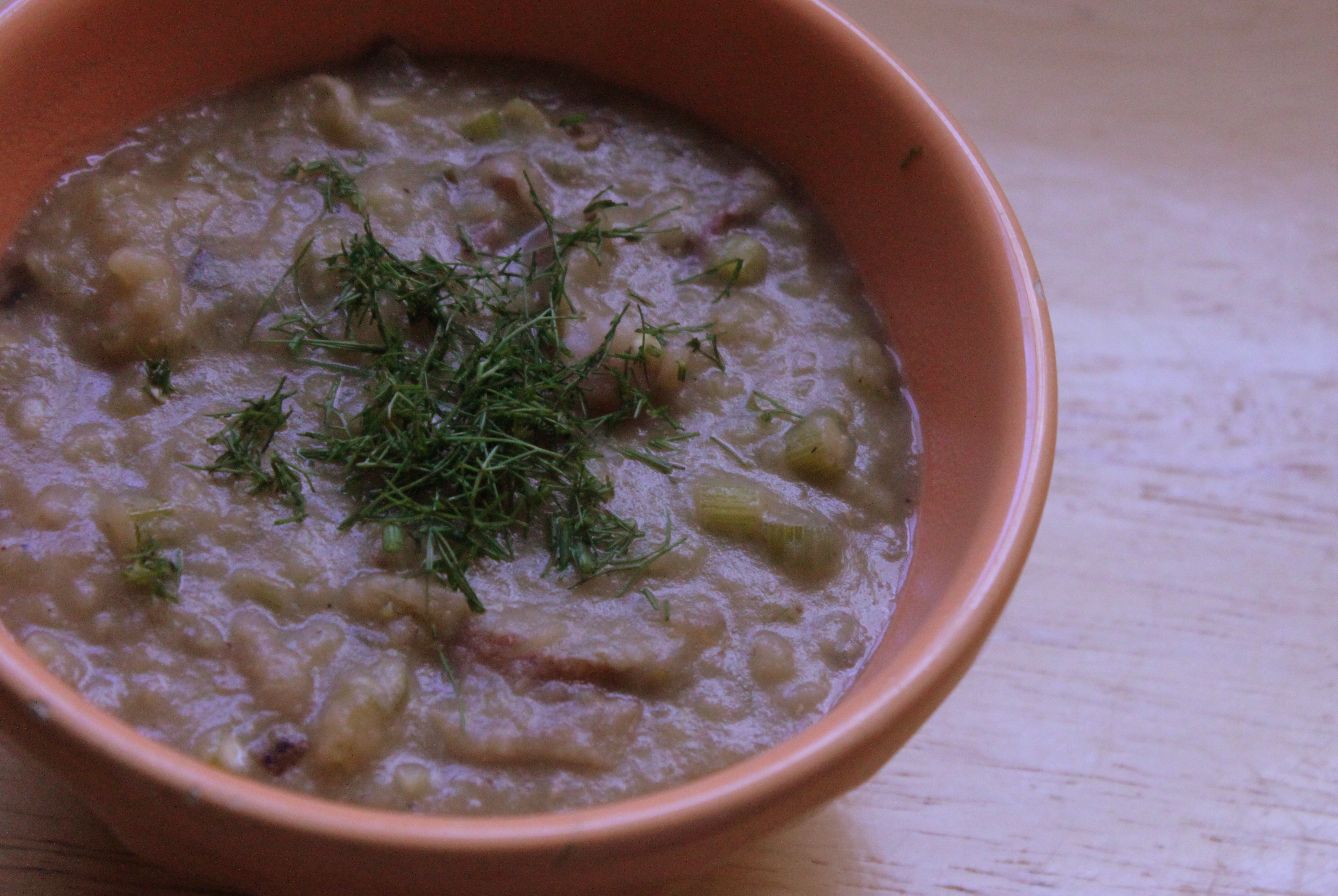
In a large soup pot saute onions in olive oil until translucent. Add fennel, potatoes and eggplant, cooking until potato pieces are lightly browned and eggplant is soft. Add hot broth and 1/2 cup milk, simmering until the potato is cooked through. Season with salt and pepper and blend with a hand blender or in a food processor until creamy, leaving a few chunks for texture. Serve with chopped fennel fronds sprinkled on top.

lemony basil dressing with honey and pepper

The mustards are my babies.

I’m not one for baby talk, I assure you. (My sister might shake her head and remind me of an ill-fated high school relationship, but “babe” will never pass my lips again). I don’t refer to pets as babies—cuteness notwithstanding—and even babies themselves get little more than an indulgent smile, usually for the parent’s benefit. My nano-pet died as many times as it achieved virtual heaven, and the only thing I find irresistibly cute is the Squishable I have asked for the past three Christmases (with no results—I’m looking at you Rae).

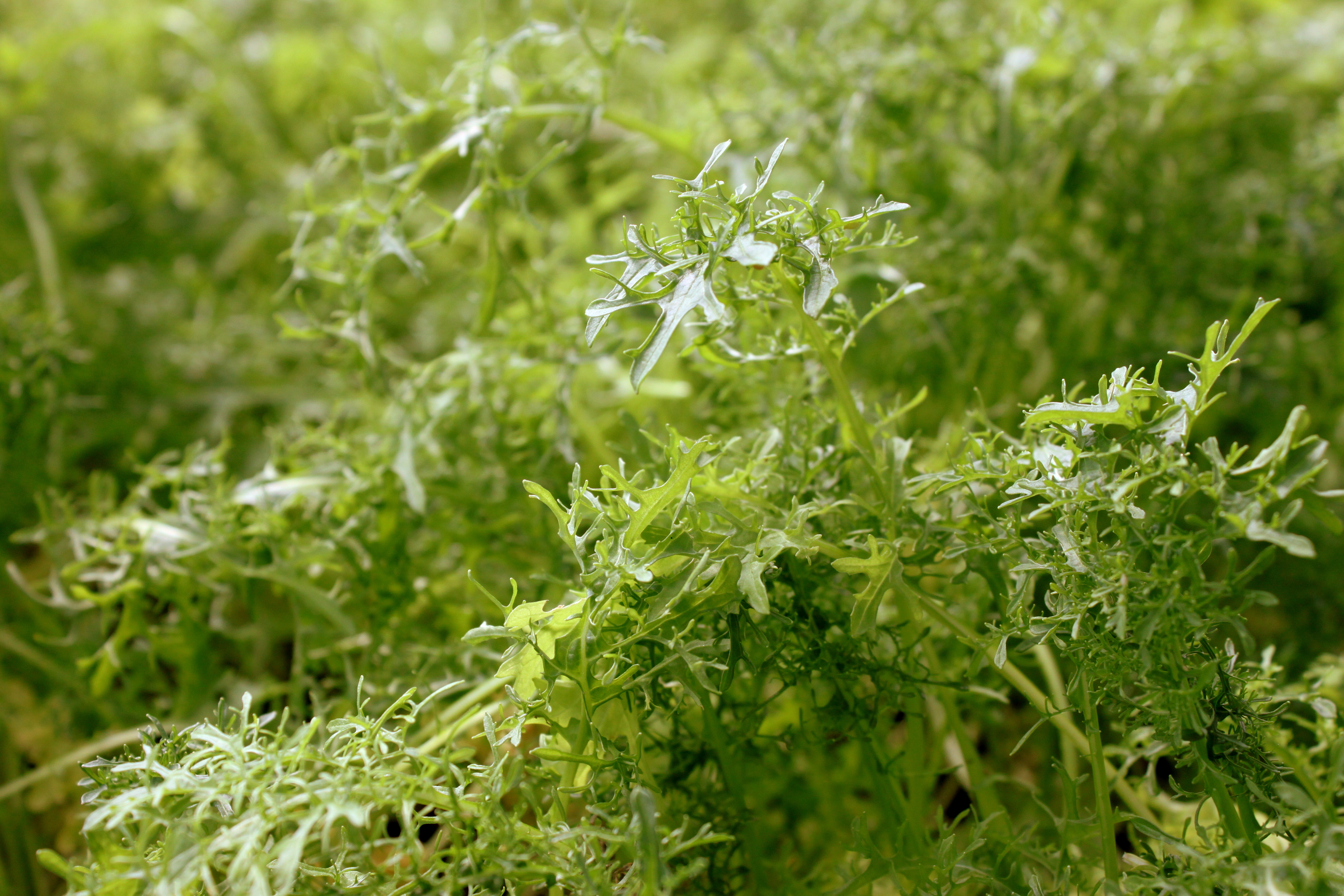
The mustards aren’t cute in any sense of the word. By mustards I mean the mustard greens we grow for the restaurant—Mizuna, Purple Mizuna, Golden Frill, and Red Frizzle—and like babies, they require an enormous amount of attention: several flats of each variety must be sowed weekly, harvested bi-weekly, and watered daily. Since it takes roughly a month from sow-date to harvest-ready they span half the greenhouse, a quilt of green and red in various states of maturity.

There’s always so much to do in garden that with our ever-increasing task list and rotating schedules it’s rare for one person to see a process through in its entirety. I may pull zucchini from a bed that Christine amends and Ross shapes and Phillip plants out and Adam harvests from, a cycle that can take anywhere from several weeks to several months. With the mustards, though, it makes more sense for one person to oversee their care and cultivation, so as to gauge how much is needed of each variety and what quantities of sowing and harvesting are necessary to meet the restaurant’s needs. When Ellen left that job fell to me, and within a few weeks I was smitten. How could I not be, watching their little shoots pushing determinedly up from the growers mix or clipping mature, frilly bunches I imagine are my own personal contribution to the restaurant?

In sowing what I think the restaurant will need in four weeks’ time I do happen to miscalculate (just two bunches of Purple Mizuna this week? Impossible!) and a few weeks ago we had ourselves a mustard glut. While the restaurant uses them to make the Garden Beignets I wrote about a little while back, they are amazingly good as a simple salad with a great vinaigrette or a light and lemony dressing. I’d never been much good at making dressings (my family has come to expect a last-minute oil-and-balsamic splash on my salads) but I recently learned a trick that makes any dressing deliciously creamy. The key is to make your flavor profile first—the vinegar, mustard, honey, lemon, etc.—then slowly add your oil while whisking constantly. It works every time, and when we gathered for a low-key farm dinner in the gardening classroom one rainy night and I had to make do with what was there, I found that even the simplest ingredients—lemon, honey, pepper, basil and oil—can become something rich and wonderful.

Lemony Basil Dressing with Honey and Pepper

1 lemon, juiced

handful fresh basil, finely chopped

honey

black pepper

salt

canola oil

In a small bowl whisk lemon juice, basil, honey, pepper, and salt, tasting as you go and adding a bit more of whichever ingredient is needed to reach your desired balance of tart and sweet (dressing making is very much about personal taste and intuition, so it’s actually easier to taste rather than going with exact amounts). When you have the perfect balance, add the oil by pouring into the bowl very slowly with one hand while whisking constantly with the other. Keep up the slow pouring/whisking action until your dressing thickens and looks creamy in texture, then dress your salad and enjoy!